Main Drain and Sewer Line Cleaning in Reading, PA
The main drain, or main sewer line, carries all of the wastewater from your home or building out to the municipal sewer or a septic system. When it clogs, the symptoms are not limited to one sink. Several fixtures drain slowly or back up at once, and the floor-level drains in the building are usually first.
If you suspect a main line problem, call Drain Masters at (610) 672-7601. You will be connected with an independent local provider in Reading, PA who can clear the line and find out why it blocked.
Signs of a clogged main drain
- Multiple fixtures draining slowly or not at all
- Toilets that gurgle or bubble when the washing machine drains
- Water or sewage coming up in a basement floor drain, shower or tub
- A sewage smell inside or outside the home
- Wet spots or sunken areas in the yard along the sewer line
If only one fixture is affected, the clog is probably in its own branch. If two or more are affected, treat it as a main line problem.
What blocks a main sewer line
Tree roots are a leading cause, entering through small joints and spreading into a mass. Grease cools and builds up on pipe walls. Wipes, paper towels and other items that should not be flushed collect and form dams. In older lines, belly sections hold water and solids, and cracked or offset joints catch debris.
How main drain cleaning works
- The provider finds the cleanout or access point.
- A cable machine opens the line and a cutting head can clear roots.
- Hydro jetting cleans the pipe wall and flushes debris.
- A camera inspection shows the cause, whether roots, a crack, a belly or a collapse.
- The provider explains repair options if the pipe is damaged.
When a main drain backup is an emergency
Sewage coming into the home is a health concern. Stop using water, keep people and pets away from the affected area, and call right away. Calls are answered 24/7. Avoid running the washing machine, dishwasher or taps while you wait.
Lowering the chance of another backup
- Flush only toilet paper and human waste
- Keep grease and cooking oil out of drains
- Have the line inspected if clogs recur
- Know where your cleanout is
- Plan tree planting away from sewer lines
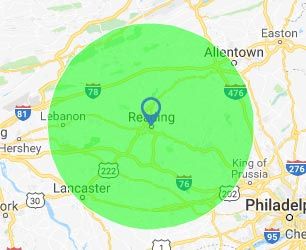
Where Drain Masters connects callers in and around Reading, PA
Many homes in Reading and the nearby boroughs have sewer laterals installed decades ago, so root intrusion and aging pipe are common reasons for main drain calls.
Drain Masters takes calls from homeowners, landlords and businesses in Reading, PA (ZIP codes 19601 through 19612) and nearby Berks County communities including Wyomissing, Shillington, Muhlenberg Township, Laureldale, Exeter Township, Mount Penn, Sinking Spring, West Lawn, Kenhorst and Temple. If your address is close to Reading but not on this list, call and ask whether a local provider can reach you.
Frequently asked questions
How do I know if my main drain is clogged?
If several fixtures drain slowly or back up together, or if the floor-level drain in the house bubbles or overflows, the main line is likely blocked.
What causes a main sewer line to back up?
Roots, grease, flushed wipes and damaged or sagging pipe are the usual reasons.
Should I use chemicals on a main line clog?
Chemicals rarely clear a main line blockage and can be hazardous. A cable or jetting machine is the usual tool.
Why does my basement drain back up when I do laundry?
The washer sends a large volume of water into the line. If the main is partly blocked, the water has nowhere to go and rises in the floor-level drain.
Can a main drain clog come back?
Yes, especially with roots or damaged pipe. A camera inspection helps find the cause so the problem can be addressed.